
Eat, Repeat
Semi-buying into the protein hype and getting way too excited about beans.

Hi gang, it’s been a minute!
A lot has happened since I posted last October, including:
Finishing my master’s
Turning 30
Surviving the holiday season by taking a lot of naps
It is now a brand new year with brand new Horrors and yet we persist. To do so, I am still committed to my little hobbies — one of the main ones being cooking.
As I talked about in my previous post, I’ve been a consistent gym-goer for about six months and I am thrilled to report that I can now pick up heavier things than when I first started.
I also shared a preliminary look into how I’d begun to adjust my eating habits to account for increased activity. And oh boy, it truly was preliminary.
The two main things I’ve learned are that I need to: 1) eat more and 2) prioritize protein.

(Thanks to Aggretsuko for this little echolalia trigger.)
However, I quickly ran into a conundrum. Most of you already know that I am firmly anti-calorie counting and I also haven’t had much practice determining what enough food actually looks and feels like for me.
Based on a quick Google search, established nutrition research says between 0.8-1.6 grams of protein per kilogram of body weight supports muscle growth in most adults. I don’t know my exact weight, so I did some quick back-of-the-napkin arithmetic to find a relatively flexible range.
For the past week or so, I’ve kept an informal food diary on my phone. If I had a nutrition label on hand, I zoomed straight for the protein value. If I didn’t, I Googled “how much protein in [x]” and used a source like Healthline or a credible medical institution to make an educated guess. This helped me figure out how much protein I eat on average and clarified the adjustments I can make to meet my needs.
While research shows that protein is on top of the hierarchy in terms of supporting muscle growth and satiety, it’s not the be-all, end-all. One of my favorite episodes of Maintenance Phase, “The Great Protein Fiasco,” covered this exact paradigm and is both highly entertaining and educational.
I learned another two things during this process: 1) truly eating enough is surprisingly difficult for me and 2) a few go-tos significantly simplify the math.
(Obligatory disclaimer that having regular access to a variety of fresh, nutritious food, the time and ability to prepare it, and resources like a local gym are enormous privileges and not ones I take lightly.)
I compiled a few reminders to help me along and hopefully you can gain one or two ideas, too.
Prioritize density
If you’ve ever seen those “What I Eat in a Day” videos from professional athletes, it is staggering how much food they go through. Even thinking about grimly gnawing through piles of chicken breast makes me feel a little sick.
As an average person trying to eat enough without getting fatigued or overloading my stomach, I am focusing on flavorful, dense meals. Thanks to chef and recipe developer Violet Witchel, there was a huge bean salad craze in 2024 and I am extremely on board.
Other pulses, seeds, and nuts are great ways to bulk up meals without too much extra work — think trail mix, granola or other yogurt mix-ins, soups, stews, curries, and casseroles. This also means that even if I eat a relatively small serving, I’m still getting a solid helping of various nutrients.
If you haven’t tried cooking a pot of white beans and your favorite leafy greens in broth with some aromatics, then spooning it over crusty bread rubbed with a garlic clove and topped with olive oil, lemon juice, chili flakes, and Parmesan, make that your winter weekend project and thank me later.
Make carbs fancy
Diet culture loves demonizing carbs, but you can pry rice and pasta from my cold, dead hands. However, I also know that eating them on their own guarantees I will need a nap 20 minutes later.
When I don’t have time to pass out for an hour, I try to bump up carb-heavy dishes a few ways:
Cooking the pasta or rice in broth or stock
Adding in vegetables and/or whatever protein I have on hand (see: my favorite 10-minute kale and garlic spaghetti)
Prepping a little pile of crudités to munch on while I cook
These little tweaks not only keep me full for longer, but also help me to cycle out random produce languishing in my fridge and cut down food waste.
Simplify your choices
My brain is easily overwhelmed by choice paralysis, so I’ve been building a little list of go-to packaged products and “whole” foods/ingredients to make grocery shopping and meal planning easier. Below are some staples that I can put together to make satisfying and flavorful meals and snacks, with the added bonus of simple protein calculations.
Examples:
Chicken thighs or breast
Salmon fillets
Eggs
Peanut butter
Whole milk Greek yogurt
Frozen edamame
Canned tuna
Tofu
Deli meat
Cheese
Frozen dumplings - shout out to Trader Joe’s pork gyoza potstickers
Protein milk, shakes, or bars - I like the Fairlife and Elevation brand
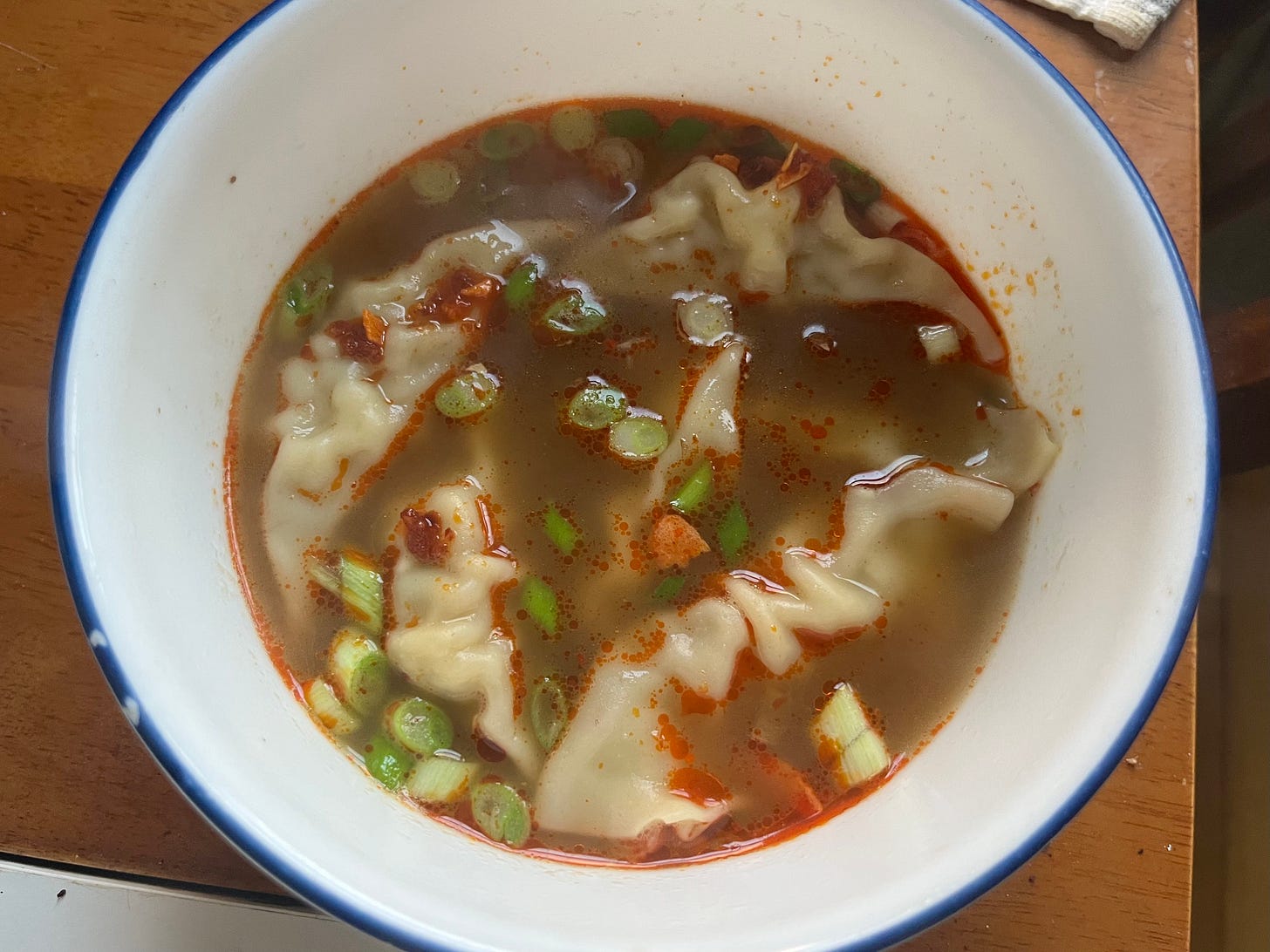
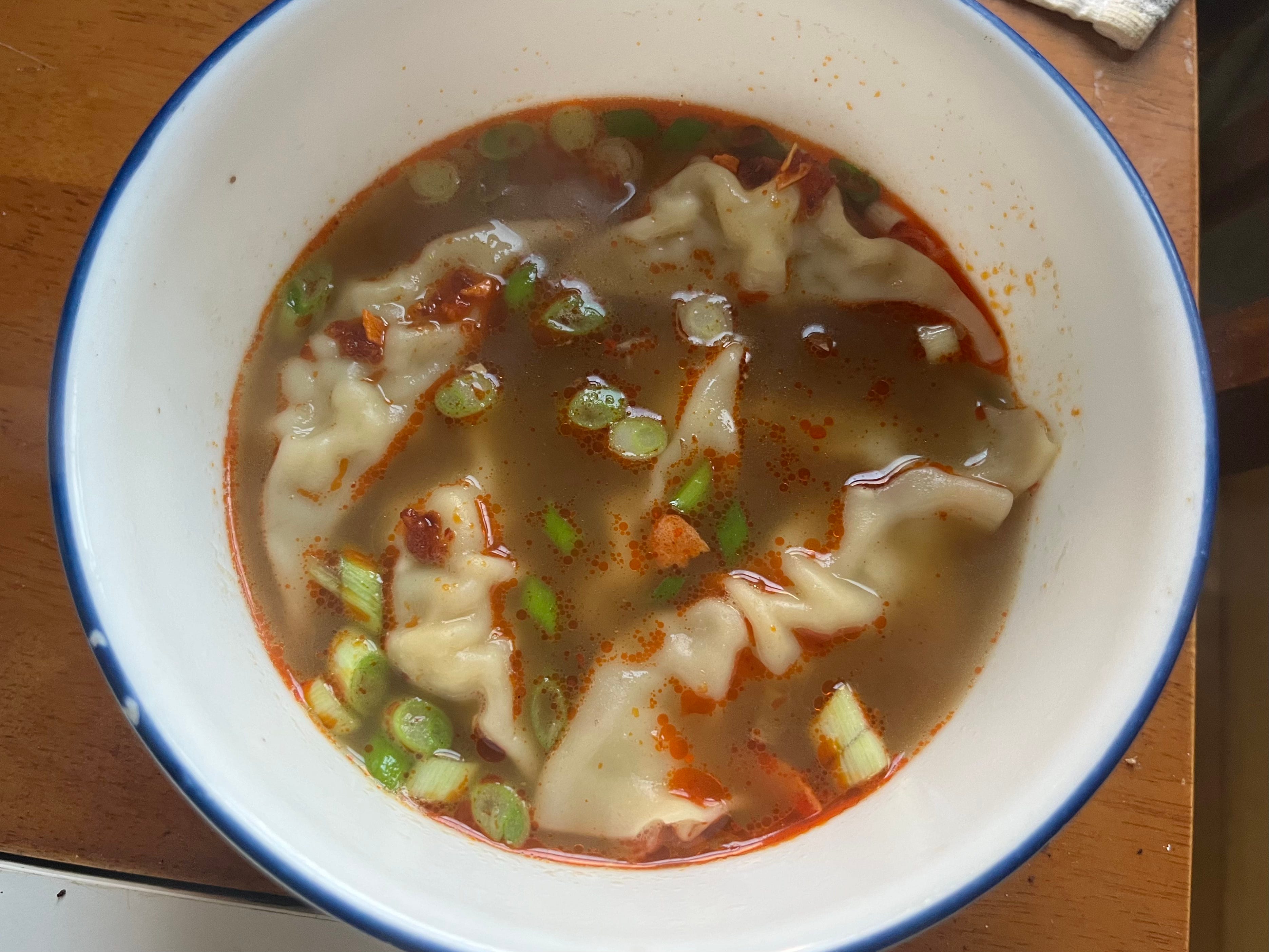
(Frozen dumplings cooked in chicken broth with garlic, ginger, scallions, sesame oil, and chili crisp. The perfect lunch, in my opinion.)
With these building blocks, I’ve been eating: salmon and rice bowls with edamame, kimchi, and boiled eggs; hearty dumpling soup with scallions and chili crisp; peanut butter toast with sliced bananas and honey swirled on top; tuna salad scattered with crunchy celery and onion; and little charcuterie snack plates.
Through a combination of meeting my protein needs with a relatively varied diet overall, I’m also fulfilling other nutrients without thinking about it too hard.
Get inspired!
The most exciting part of this process for me has been finding new cooking ideas.
It’s also fun to return to my tried-and-trues and find new ways to play around with them:
Listen to your body
This should go without saying, but paying attention to our personal needs day-to-day and even moment-to-moment is crucial. For more insights, check out this Seems Like Diet Culture podcast episode on regaining your hunger and fullness cues.
Hunger levels and cravings fluctuate just like everything else, so staying in tune with our bodies and how we feel emotionally can help to reduce a lot of the other random noise. Ultimately, eating should be joyful and fulfilling, not stressful.
And no matter how much protein I may or may consume, I still will never eat cottage cheese.